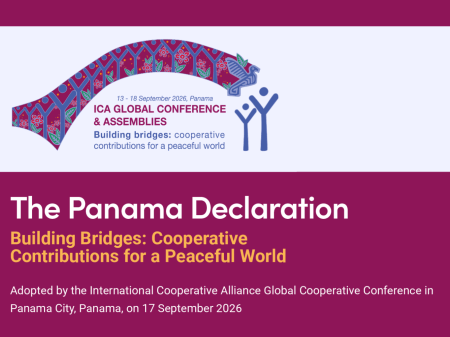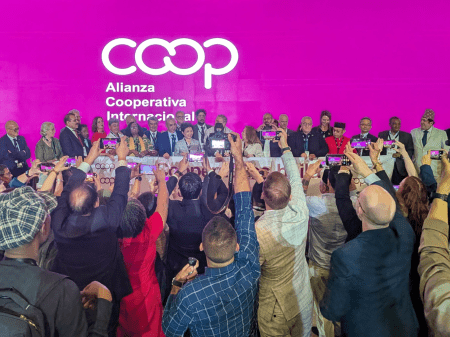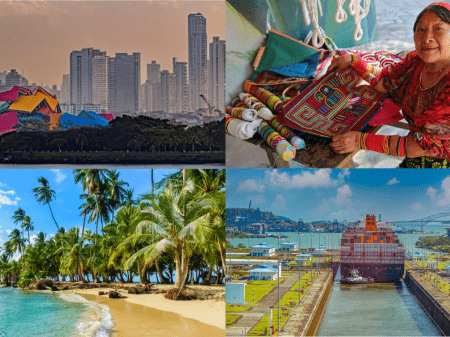
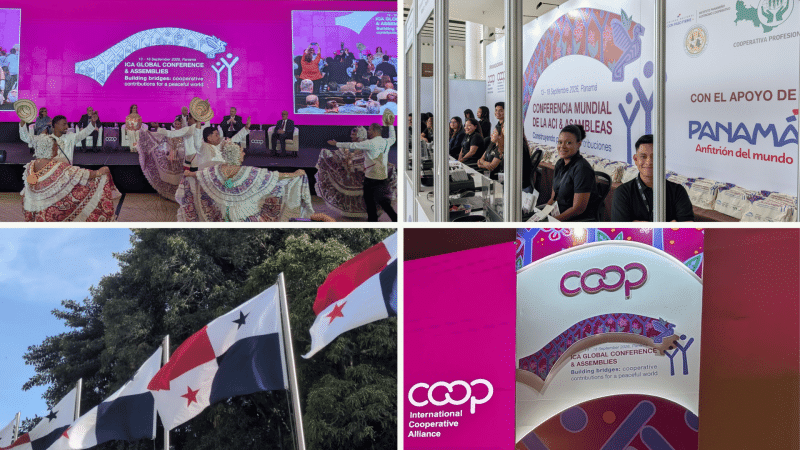
Peace is more than an absence of conflict. The seeds needed to create a society without warfare are sown long before the first blood is drawn. And cooperatives are vital actors in creating harmonious communities in a world rife with economic, political and environmental challenges. These were the prevailing messages that emerged at the ICA Global Conference and General Assembly in Panama in September, which brought together over 1100 people from around 80 countries under the theme Building Bridges: Cooperative contributions for a peaceful world.
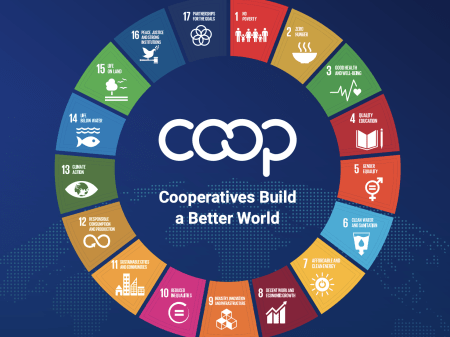
The week – which included the ICA elective General Assembly, the launch of the Panama Declaration and the publication of a Policy Brief report demonstrating how cooperatives are essential partners in helping the world to achieve each of the 17 United Nations’ Sustainable Development Goals (SDGs), and the ICA Communications Strategy 2026 - 2030. The event also heard from ministers, dignitaries and cooperative practitioners, leaders and academics from around the world. The idea of peace, and how cooperatives lay the groundwork for the conditions of peace, was a thread from the very start, with video messages shared by Indian development economist Jayati Ghosh and Tunisian human rights activist and Nobel Peace Laureate Ahmed Ben Tahar Galai.
“The problems we face … cannot be resolved through entirely nationalistic approaches. They require cooperation,” said Ghosh. “We have to move away from a pessimistic appreciation of the world that we're in towards a recognition that it still contains possibilities and that working together, we can actually work towards a better outcome for everyone”
Galai highlighted that the cooperative movement, “as a structure of the social and solidarity economy, can contribute to [peace] because it breaks with the capitalist system that drives wars: the system of profit at all costs, the system of hoarding wealth in the hands of a minority... These structural causes are the origins of war, and the cooperative movement can point them out."
The conference was formally opened by Agrupación Folclórica Herencia, Legado y Tradición (Folklore Heritage Group, Legacy and Tradition), with a traditional Panamanian performance in front of distinguished guests who officially began proceedings
______
“Our country has been and will be a builder of bridges,” said Roberto Linares (Minister of Agricultural Development of the Republic of Panama, representing the President, H.E. José Raúl Mulino Quintero), highlighting how, with the conference being hosted in Panama, the country has “become the epicentre of solidarity, equality and peace”. He added that the world is facing “incredible geopolitical challenges - and confronted with that, the cooperative model is not a secondary alternative, but a crucial motor for peace, sustainable development and decent work.”
Rolando González Patricio (President of the Latin American and Caribbean Parliament (Parlatino)) shared how the region is subjected to specific regional pressures, but that the Parlatino is “embracing interdialogue and intercooperation to build a better, fairer and more peaceful future.” This builds on work undertaken in 2012, he added, when the Parlatino formalised a historic agreement with Cooperatives of the Americas, which established an ongoing collaborative framework between the region's legislative bodies and the cooperative sector.
Ana Graça (United Nations Resident Coordinator in Panama) noted that sometimes bridges are not made of steel and cement. “Sometimes they are built with trust and solidarity,” she said. “This is what cooperatives do: build bridges between people and communities, inclusion and opportunities, development and peace. It is in these spaces that trust is strengthened, and solutions are found … which is important, because peace is more than the absence of conflict, but the need for justice, inclusion and opportunities.”
Erika Vargas (Executive Director of IPACOOP, Panama) talked about the global nature of cooperatives. “When I look at this room, I don’t see a list of names or organisations - I see faces of effort that reflect a global cooperative community that works together with dignity and respect.” True change cannot be done in silos but is done by uniting wills, she said, adding that “Our strength is not an alternative to the economy; it is a world power.”
José Alves de Souza Neto (President of Cooperatives of the Americas) welcomed delegates to Panama on behalf of the regional office. A growing loss of trust in people and institutions means the world needs bridges more than ever,” he said. “You can build walls, or you can build bridges. The cooperative movement has chosen to build bridges - this is part of our identity and our story.” But to build a bridge, he said, “someone had to believe that two separate sides could be connected. Someone had to imagine that - and that's what cooperatives do every day.”
Ariel Guarco (President of the ICA) noted that the Bridge of the Americas was chosen as the conference logo as cooperatives identify deeply with the idea of bridges - particularly in such a tense, violent and conflict-ridden time. “Peace remains the main challenge of our time,” he said. “Behind each conflict there are people; each displacement has a story. Cooperatives have a chance here to build peace by asking ourselves what economy, democracy, and society we want to build.”
____
In her Keynote address, Bjørg Sandkjær, Assistant Secretary-General for Policy Coordination in the UN Department of Economic and Social Affairs (DESA), quoted UN Secretary-General António Guterres, who said, “Peace is never passive; peace is hard work, and peace is action”.
Sandkjær highlighted how for more than 80 years, the UN has worked to advance social rights and foster international cooperation. “This work is rooted in the conviction that security, development and human dignity are inseparable from lasting peace,” she said, adding that “peace can’t exist where exclusion prevails, development can’t flourish where conflict destroys opportunity … the UN increasingly emphasises prevention, addressing the drivers of conflict.”
She noted that cooperation is not a niche economic activity, but is an important model that can address these challenges. This was highlighted last year through two intergovernmental outcomes - the Doha Political Declaration and the Seville Commitment (Compromiso de Sevilla), two interconnected, landmark UN frameworks designed to reform global governance, supercharge social foundations, and secure the trillions of dollars needed to achieve the Sustainable Development Goals (SDGs). Both of these, published during the 2025 International Year of Cooperatives, demonstrate how “Cooperatives are essential to building more peaceful, more equitable societies.”
Sandkjær was presented with the first copy of the ICA SDG Policy Brief report. “The SDGs are a shared blueprint for peace and prosperity,” she said. “The responsibility rests with us to make sure no one gets left behind. Economies are stronger and more resilient when all people can participate fully in economic and social life.”
___
In a video address, International Labour Organization Director-General Gilbert F. Houngbo, noted that the ILO has maintained a dedicated structure for cooperatives and the social and solidarity economy since 1920.
"The ILO’s Recommendation 193 on the Promotion of Cooperatives provides an international framework for policies that enable cooperatives to develop in line with their values and principles," he said, urging the cooperative movement to keep strengthening its impact on decent work, resilience and peace amid global uncertainty, conflict, and inequality. “Lasting peace can only be established if it's based on social justice.” You can watch the full address here.
In a panel debate moderated by ICA Director General, Jeroen Douglas, Andrea Matteo Fontana, Ambassador-designate of the European Union to Panama, described the importance of the EU and cooperatives working together to promote more cooperative activity at the local level. “Cooperatives have a role in bridging economic development, promoting social inclusion and connecting communities,” he said, adding that the EU was open to dialogue about cooperative involvement in the Global Gateway initiatives – the EU's plan to invest up to €300bn in infrastructure projects around the world.
Spain is deeply committed to the social economy, said Amparo Merino Segovia , Secretary of State for the Social Economy in the Government of Spain – and cooperatives are increasingly visible in multilateral conversations. In in March 2026, the Spanish Congress approved the Comprehensive Law for the Promotion of the Social Economy, which has a part specifically dedicated to the cooperative movement, and in June, the Governments of Spain, Brazil, and Colombia convened the launch meeting of the Group of Friends on the Social and Solidarity Economy (SSE). “We can loudly say, at least in Spain, that there is political recognition of the social economy,” Segovia said, “but we need to move forward and create a political and institutional agenda that is real and efficient and achieves results.” She also expressed concern that the ILO’s Cooperatives and SSE may be under threat.
Thérèse Faye Diouf (Chairperson of the Committee on Monetary and Financial Affairs of the Pan-African Parliament) believes “economies can’t develop an inclusive economy if we don’t develop cooperatives”. She noted how cooperatives facilitate job creation for young people and contribute to food security and safety. “If we don’t develop collectively, we are individually vulnerable - we have to act collectively.” She also highlighted the importance of cooperative regulation, which is important to support access to funding, public markets and state support, and noted the Pan-African Parliament’s (PAP) formal adoption and launch of the Model Law on Cooperatives for Africa last year.
Shobha Shetty (Senior Adviser, Agriculture, World Bank Group, and Head of the Global Agriculture and Food Security Program (GAFSP)) acknowledged that farmers are facing a myriad of shocks, from conflicts and fertiliser price hikes to “a massive El niño on the horizon – but there is a reason for hope, she said, including a “general shift towards a greater focus on aggregation”. She gave the example of AgriConnect, a World Bank Group initiative designed to transform smallholder farming and boost global food security. “Cooperatives are critical to the shift, and are a key pillar to achieving this over the next six years.”
In a video message, Mario Lubetkin (Minister of Foreign Affairs of Uruguay and President of the G77) described how the international order under the UN is under threat. “Differences between countries don’t have to become armed conflicts”, he said, acknowledging that “Peace and integration are strengthened mutually, but both require dialogue … Through its multilateralism, the international cooperative movement has a role in contributing to addressing exclusion and poverty and making sure no one is left behind.”
Hagen Henrÿ (Chair of the ICA Cooperative Law Committee) echoed this, underscoring that “social injustice is leading to conflict”. He believes that if national laws integrate the text of the ICA (the Statement of Cooperative Identity), “it would take us a long way towards peace” - and that multilateralism as we have known it (ie the relationship between states) “will remain … but needs refining."
It’s currently insufficient, Henrÿ said, “because the practice of globalisation has allowed certain actors to use new technology to stay outside the reach of national laws and create their own multilateralism. The structure of enterprises – including cooperatives – is changing. They are interconnected with each other, which has enormous consequences … My dream is: why not have a new type of multilateralism, made by cooperatives, which takes advantage of the enormous amount of knowledge in the sector.”
___
Delegates heard from Babu Kaji Thapa, General Manager of the National Cooperative Federation of Nepal, on the socio-economic contribution of cooperatives to peace, before taking part in parallel breakout sessions exploring the three pillars of the ICA’s 2026-2030 strategy, Practice, Promote, Protect. The Practice breakout session sought to build bridges between generations, genders, and the wider cooperative movement while exploring what it means to put cooperative values into practice. In the Promote breakout session, communicators, advocates, and cooperative leaders took part in a workshop to equip delegates with the tools to amplify cooperative narrative, shape policies, and drive systemic change. The Protect breakout session looked at what cooperative identity means through a Cooperative Identity Lab that explored how to protect cooperative identity in a changing world.
___
The second day opened with a keynote from ICA President, Ariel Guarco, who said peace is “a sensitive topic that is difficult to tackle” and can’t be discussed “without doing a deep dive into the current global situation and trying to understand the conditions that are creating conflict”.
He noted the UN was founded to reduce conflict after two world wars – but that there are currently 130 active armed conflicts (ICRC), 65 state-based conflicts in 2025 (the highest since 1946, PRIO), and world military spending stands at $2.89 trillion annually. Some leaders now present "force and confrontation as legitimate instruments for resolving differences," he said, while at the same time hundreds of millions of people faced hunger, a lack of education, precarious work and a lack of healthcare.
Against this, cooperatives are a model that "put people at the centre", he said, citing Pope Francis’ statement that if the economy is not in the hands of people, 'The Economy Kills’. “Without economic democracy, there is no other kind of democracy either," he added.
Dr Guarco rejected the idea that society is passive, praising the “millions of cooperators already at work” to make lives better through access to finance, farming, housing, health care, technology and utilities, as well as those working in retail, organising as worker cooperatives and preserving cultural practice.
He sees cooperatives as bridge-builders that can develop "Civil Diplomacy where the diplomacy of governments has been cut,” and called on the audience "not only to work in cooperatives, but to live cooperatively,” and work together "for that Better World that we all want, that Better World that we all deserve." Watch Dr Guarco’s full speech here.
___
The theme of peace continued with reflections from Hon. Tangariki Reete (Minister of Tourism, Commerce, Industry and Cooperatives of Kiribati) and Hon. Gloria María De León Zubieta (Minister of Tourism of Panama) on the role cooperatives can play in supporting communities and contributing to peace – particularly in the face of climate change
The final panel of the day was opened by moderator Danilo Salerno (Regional Director, Cooperatives of the Americas), reading a letter from Michelle Bachelet, the former President of Chile and former UN High Commissioner for Human Rights, who urged the global movement to move beyond everyday business practices, to tackle peace, governance, and peaceful multilateralism on a wider scale.
During the following discussion, María Ortiz (Executive Director for Leadership Initiatives, Aspen Institute, Mexico), highlighted that the conference felt particularly relevant for the current times – and that it was symbolic to discuss finding pathways to connect people and communities in a “location that literally connects the American continent.” David Aguilar (Academic Affairs Manager, City of Knowledge), spoke about Ciudad del Saber, the Panama City innovation hub built on the former Fort Clayton military base, covering its history, mission, and the community of businesses, UN agencies, NGOs, government bodies, and academic programs based there.
He also touched on its sustainability initiatives (LEED-certified buildings, an urban master plan) and its role as a regional center for innovation and entrepreneurship.
Valtencir Mendes (Chief of Education, UNESCO Office for Latin America Second section), spoke about AI and introduced the AI education observatory they have developed, while Donna Dizon (CLIMBS) shared updates from the Cooperative College of the Philippines and its partnership with Cooperatives UK.
Dr. Halefom Gezaei Abera (FANA Youth SACCO, Ethiopia) shared how the organisation is expanding access to savings, credit, entrepreneurship support and skills-building for young people, helping turn financial inclusion into a pathway for hope, opportunity and recovery.
François Dionne (SOCODEVI) spoke about cocoa cooperatives in Colombia as a driver of development, social inclusion and post-conflict reconciliation, linking Colombia's peace process and reintegration efforts to the cooperative model's economic results — higher incomes, market access and productivity gains for cacao-growing families. He highlighted the social outcomes too: strong participation of women (84% in decision-making) and youth, community leadership, and international recognition of Colombian cocoa quality — framing cooperatives as builders of trust, inclusion and sustainable peace.
Representing the Italian cooperative movement, Attilio Dadda (President Legacoop Lombardia, Italy, and Vice President de Legacoop Nazionale) shared examples of how the cooperative movement is one that contributes to social cohesion and helps communities navigate and overcome periods of crisis.
During the session, three young leaders from Latin America (Milagros Arias Tuñón, Mateo Cando and Kiriam Palma) were called for a Q&A with senior leaders to exchange knowledge and lessons that youth could use for their leadership growth. It was agreed that organisations needed to better involve youth in programme execution, young people should be given genuine responsibility (not just token participation) and that co-ops should use young people’s skills and listen to them.
___
During the event, Delegates also heard a number of short announcements.
Ariel Guarco launched his new book, Cooperativas en Acción II (Co-operatives in Action II, currently available in Spanish only), which showcases stories of cooperation from around the world. Noel Raboy, CEO and President of CLIMBS, Philippines, and Board Member of the Fund for International Cooperative Development, invited global cooperatives to apply for solidarity funding after making US$68,000 available for cooperative-led action.
Violetta Nafpaktiti shared updates from DotCooperation, which manages the .coop domain, COOP marque assets and Cooperative World Map, among others. She invited all attendees to put their members on the map and connect with the digital assets the global movement has created for them. "This is ours, let's use it," she said. "Let's turn up the volume on the global voice of cooperatives."
Tiago Schmidt, President of Sicredi Pioneira Brazil and Chairperson of the ICA Working Group on Cooperative Cultural Heritage, announced the 2026 CCH inscriptions, comprising 63 new sites and elements from 39 countries. The new inscriptions demonstrate the remarkable diversity of cooperative heritage across regions and generations.
Santosh Kumar, ICA Director of Legislation, presented amicus.coop, a new legal and policy platform for the global cooperative movement that seeks to bring cooperative law closer to those who make, interpret and use it.
Following the presentation of the Panama Declaration, Panamanian co-hosts Alex Ortega (President of Cooperativa Profesionales and Erika Vargas (Executive Director of IPACOOP Panama) thanked delegates for attending, and Cooperatives of the Americas President, Jose Alves, reminded delegates that "a declaration should not be the end point of a conversation. It should be the beginning of a commitment.
He added: "A cooperative can offer a local solution; millions of local solutions, connected by a global movement, can generate a truly transformative impact."
To end the conference, Chitose Arai, (Japanese Consumers’ Cooperative Union) and Kenki Maeda (Japan Co-operative Alliance) led a hands-on origami ceremony, bringing participants together to fold paper peace doves. Ariel Guarco and his son Juan, together with and Boris Allara (Deputy Executive Director, IPACOO), closed the event with a cover of John Lennon’s Imagine, and the lyrics that spoke strongly to the conference and its theme: “Imagine all the people // Livin' life in peace”
Delegates also had the opportunity to speak with staff from the ICA Global Office at a dedicated stand and meet some of Panama’s cooperative businesses at a dedicated Coop EXPO, with the chance to buy items such as coffee, traditional sweets, and artisan handicrafts.
And a special Solidarity Bingo activity was organised by the First Lady of the Republic of Panama, Hon. Maricel Cohen de Mulino, as part of a major national campaign designed to raise funds for critical healthcare and social infrastructure projects across the country.
A very heartfelt thank you to all the partners, sponsors and hosts who made this event possible. For the full list, visit icapanama2026.coop/partners-sponsors