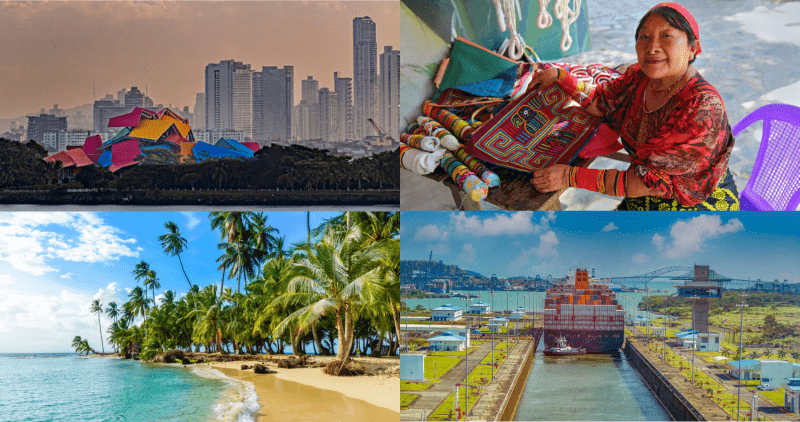
From tropical rainforests and Caribbean beaches to one of the engineering wonders of the world and the only capital city named UNESCO Creative City of Gastronomy, Panama is a vibrant country with a vast, intricate culture and history.
The 2026 ICA Global Cooperative Conference, organised with regional body Cooperatives of the Americas, will see delegates from cooperatives around the world meet in Panama City in September, with the opportunity to explore different aspects of the country.
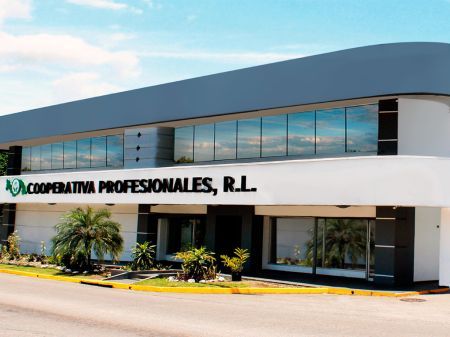
Panama covers 74,340 km² (28,703 sq miles) and has a population of around 4.6 million. It has more than 615 active cooperatives, with over 250,000 members and assets exceeding US$2.7bn. You can read more about cooperatives in Panama and our hosts, IPACOOP and Cooperativa Professionales, here and here.
Visit Panama (the brand owned and operated by PROMTUR, Panama's Tourism Promotion Fund) is supporting the event – and on 26 August saw the launch of a new national brand – "Panamá, Anfitrión del Mundo" (Panama, Host to the World) – to serve as the country's positioning platform, integrating tourism, investment, exports, culture, and sustainability.
"This demonstrates once again that when we unite around a shared purpose, we are capable of achieving great things,” said José Raúl Mulino, President of the Republic, at the launch. Mulino will be participating in the opening and closing ceremonies of the ICA Global Conference.
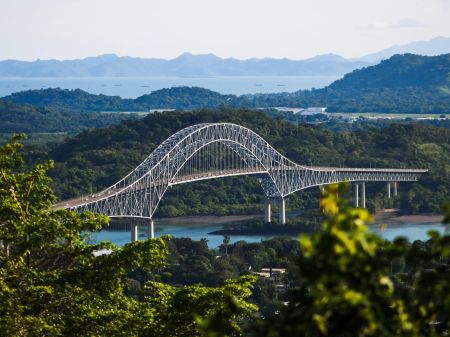
Alongside the Panama Canal and Bridge of the Americas, the country’s islands and rainforests are biodiversity hotspots; the country is known as the bird capital of the Americas, being home to 1020 species (around 10% of all bird species on Earth) – more than the USA and Canada combined. For architecture enthusiasts, the Biomuseo is the first work of world-renowned architect Frank Gehry in Latin America. The building is designed to tell the story of how the Isthmus of Panama emerged from the sea, connecting two continents - very much linked to the theme of our conference! Gehry used vibrant colours, which are rare and break from his typical style defined by metallic surfaces and curved shapes.
Panama’s location as a narrow isthmus linking Central and South America has shaped its entire history. Long inhabited by indigenous groups such as the Guna, Emberá and Ngäbe, the region became a Spanish colonial crossing point after 1519, when Panama City was founded as a staging post for shipping plundered gold from Peru back to Spain.
Panama eventually broke from Spanish rule as part of Gran Colombia in 1821, later separating from Colombia entirely in 1903 – with US backing – clearing the way for the construction of the Panama Canal, completed in 1914 and transferred fully to Panamanian control in 1999. Today the canal remains the country's defining feature, underpinning an economy built on shipping, logistics and banking, while Panama's mix of indigenous, Spanish, Afro-Caribbean and immigrant influences gives it one of the most culturally diverse populations in Central America.
This is reflected in local cuisine, from sancocho de gallina, the hearty chicken, yam and cilantro soup considered the national dish, to ropa vieja, slow-cooked shredded beef in a rich tomato sauce whose curious name — "old clothes" — nods to its tattered appearance. Patacones, twice-fried plantain slices served as the country's most common side, Fresh ceviche is a favourite light bite, and tamales panameños and hojaldra (fried breakfast dough, often with eggs and cheese) are well-loved breakfast staples.
Find out more about this beautiful country and opportunities for travel at tourismpanama.com and icapanama2026.coop/tourism!
Find our more practical information (including currency, climate and voltage requirements) here.